
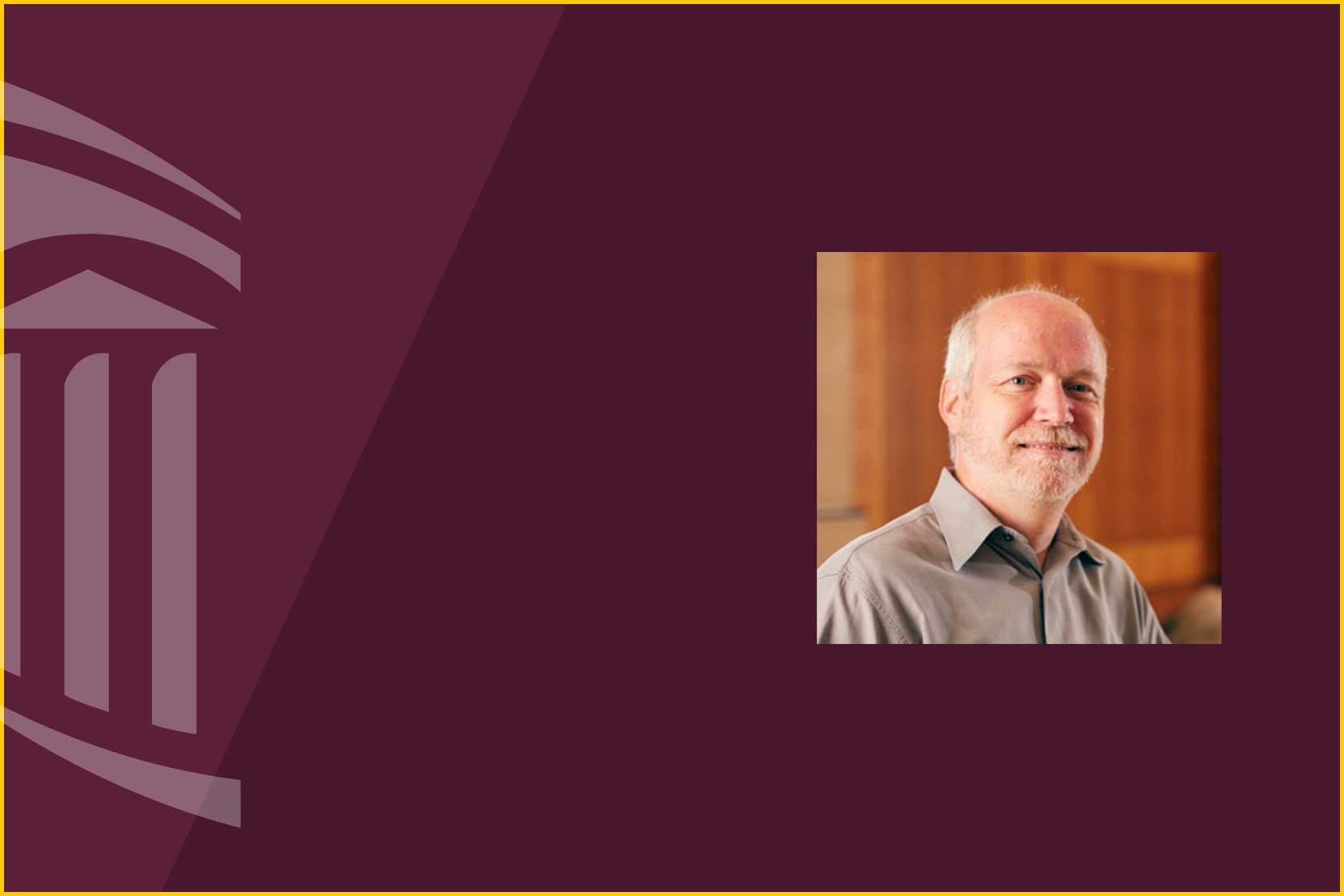
This fall, Maryland Carey Law welcomes Randal Whitehead ’11 back to campus as a patent clinic instructor for the Intellectual Property and Technology Law Clinic (IPTLC). Whitehead brings more than a decade of patent practice experience to the classroom, along with a background that sits comfortably at the intersection of law and technology. The clinic allows students to work on real intellectual property matters under the USPTO Law School Clinic Certification Program while developing the practical skills needed to advise clients and navigate patent practice.
Whitehead's own path to patent law reflects that same combination of technical and legal training. He earned an M.S. in Computer Science from the University of North Carolina in 2001 before attending Maryland Carey Law, where he graduated in 2011. While at Maryland Carey Law, he was involved with the clinic, formerly known as the Maryland Intellectual Property Legal Resource Center, and the Maryland Intellectual Property Students Association. After law school, Whitehead began his patent-law career at Staas & Halsey LLP, where he practiced from 2009 to 2015. He then joined Bookoff McAndrews, where he spent nearly a decade working on intellectual property matters. He is registered to practice before the U.S. Patent and Trademark Office and has focused his practice on patent application preparation and prosecution.
His experience also includes teaching. Before returning to Maryland Carey Law, Whitehead served as a Professorial Lecturer in Law and Patent Supervisor in the Intellectual Property clinic at The George Washington University Law School, bringing his experience as a practicing patent attorney into the law-school classroom and clinic settings.
Now, he is coming home.
We recently caught up with Randy to ask him about his decision to return to Maryland Carey Law, his experiences in patent practice, and what he hopes students will take away from the experience.
What made you want to return to Maryland Carey Law to teach after practicing patent law for more than a decade?
After I retired from full-time practice, Prof. Patricia Campbell, the director of the Intellectual Property and Technology Law program and of the IPTLC, contacted me about working with patent students in a clinic setting. Prof. Campell and I have remained friends since my time working in the clinic as a student, so I was excited about the possibility of working with her again and about working with students. The law school was always a very comfortable place for me, but I was still surprised how natural it felt the first time I walked into the building after ten-plus years away.
You were a clinic student yourself. How has your experience as a student influenced the way you approach teaching today's law students?
I’ve always said that working in the clinic was among the most valuable parts of law school for me, so I’m definitely focused on providing a similar experience for my students. I also remember being a student and a new associate at a firm and how important it was to have more experienced attorneys willing to answer questions and provide guidance. I’ve tried to pay that debt back by being open to questions from new associates in a law firm setting and now working with clinic students.
What do you think law students sometimes misunderstand about what patent attorneys actually do?
The biggest surprise for me, as it will be for many patent students, was the breadth of technologies I worked on. My background is in Computer Science, and I expected to work mostly on software applications, but I ended up also working on home appliances, electronics, telecommunications, robotics, medical devices and diagnostics, heavy equipment and transportation, and the list goes on. There are always opportunities to take on new and interesting work.
What do you hope students will gain from their experience in the Clinic that they might not get from a traditional classroom course?
In most doctrinal classes, the students are working in a closed universe to satisfy the requirements of the faculty. Clinic is different in that there is more of a sense of collaboration with the faculty to meet external, real-world issues of the clients. It is these real-world deadlines and requirements that are driving the work, and it is up to the students and faculty to work together to ensure that the client’s interests are protected. In a way, the clinic functions like a small law firm with the student attorneys doing the work of a firm’s associates and clinic faculty acting as the firm partners supervising the work and handling the planning and administrative responsibilities. One of the first things I tell my students is that we will be working as colleagues.
What advice would you give to a law student who is interested in pursuing a career in patent or technology law but isn't sure where to start?
An important early step determining a starting path in IP law is to understand where their interests and background might fit in the IP universe of patent litigation, patent prosecution before the USPTO, trademarks, etc. Taking an IP Survey course, which is available as a 1L elective, is a good place to start.
One thing that surprises some students who are interested in patent prosecution is the technical education requirements for registering to practice before the USPTO, which are quite strict, so understanding whether they are eligible for that practice is better done early than late.
If they are interested in patent prosecution and are eligible, taking the USPTO registration exam (also known as the “Patent Bar”) prior to law school or early in law school will give them a head start in finding interesting jobs for summers and after graduation. I was able to do that before starting law school and don’t know how I would have been able to find time after graduation.
Patent law is a broad field both in terms of the technologies involved, but also in career tracks between government (USPTO and otherwise) versus private firm versus in-house and litigation versus prosecution. I’ve seen colleagues move back and forth between all of these as opportunities arise. I would tell students to be open to new experiences and opportunities.